Welcome to our now-traditional look over what we at SFFWorld have enjoyed this year. We have tried to limit our choices to five in each category, although as you will see, this can vary. Most are in alphabetical order, or no order of preference.
Part 3: Science Fiction Books
The staff involved this year at various stages are Rob Bedford, Mark Chitty, Randy Money and Mark Yon.
———————————————
In Part 3, it’s: Science Fiction Books
Mark Chitty:

Exodus: The Archimedes Engine by Peter F Hamilton
Mark reviewed Hamilton’s latest when it was released in September, and there’s not much more I can add to his review – it echos many of my thoughts. Ultimately, The Archimedes Engine is a typical Hamilton novel – big on ideas, dense with plot, plenty of characters to carry the tale along, and technology galore. Easily my favourite read of the year.
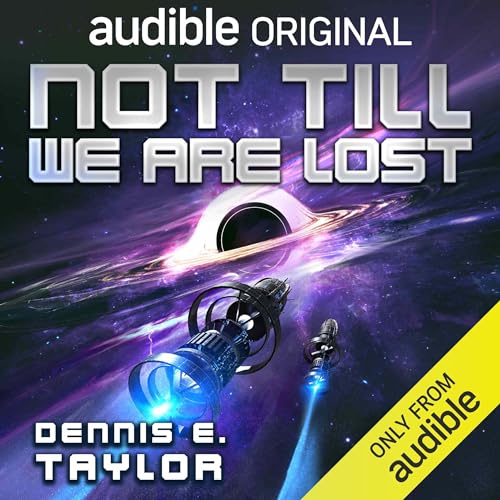
Not Till We Are Lost by Dennis E Taylor
Taylor’s latest (and 5th) Bobiverse novel, and audio exclusive for the moment (until January 5th), was back on par with the first trilogy, delivering pretty much everything that makes these books so good. With new discoveries in the galaxy, and the Bob’s needing to get themselves together to address these, Taylor manages to juggle plenty of plot threads easily, and Ray Port brings the story to life as one of the best narrators out there.
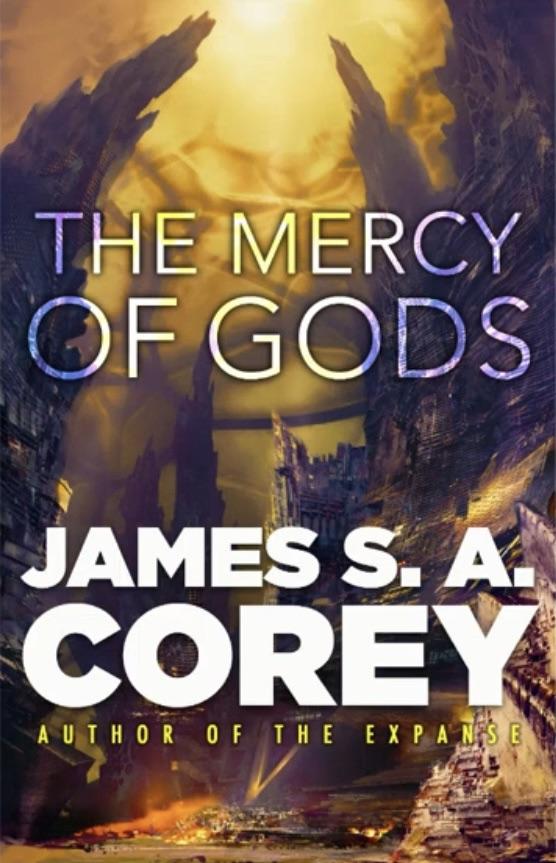
The Mercy of Gods by James S.A. Corey
Here’s a novel that was eagerly awaited this year given how much I enjoyed the Expanse series, and it didn’t disappoint. Set in the future as humans on the planet of Anjiin face an alien invasion, Corey sets the scene early and builds up the layers as it progresses. Some great stuff here, and the sequels will be high on the to-read list when they’re released.
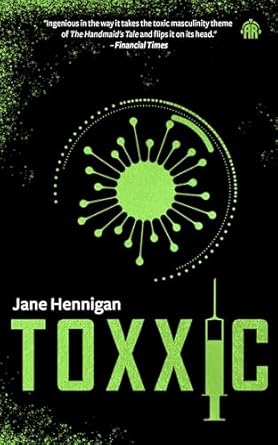
Toxxic by Jane Hennigan
Hennigan’s Moths made my top 5 last year, and it’s no surprise that the sequel, Toxxic, follows that tradition. In a world full of mediocre post-apocalyptic zombie stories, Hennigan did something fresh, and Toxxic continues the interesting world and ideas that she presented in Moths. With the return of men to society there are some interesting ideas explored, all told with style and aplomb. I sincerely hope there’s further stories in this setting.
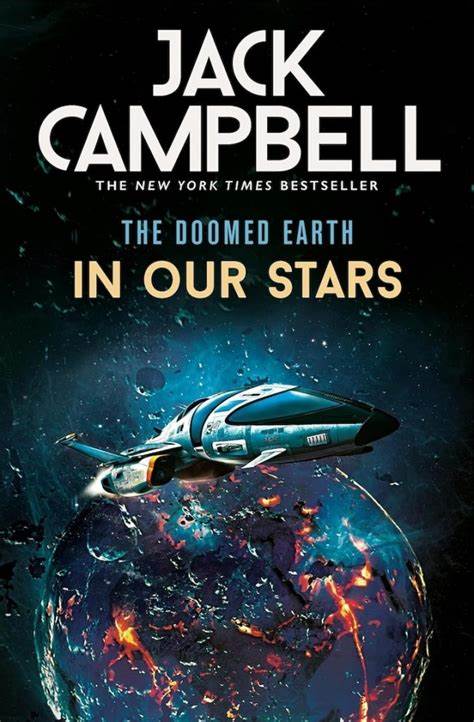
I always enjoy Campbell’s novels, with his Lost Fleet series having been a solid and consistent read for me each year with the new release. This year, however, is something different – a new universe where Earth was destroyed, but a time-travel mishap sends our protagonist back to before this event. What follows is simply a good, enjoyable, fast-paced story that just works. There’s more to come to finish of this story, and I look forward to it very much indeed.
Randy Money:
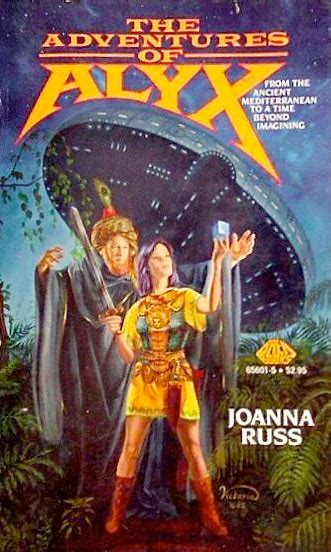
The only SF I read this year were oldies but goodies: Joanna Russ’ The Adventures of Alyx and Picnic on Paradise, feature the adventures of – well, Alyx. These cheerfully take the conventions of Sword & Sorcery up to that time and plant them on their head, enough so that the short novel is science fiction. And for anyone interested in a slightly tangential book, I’d point them to Riley Sager’s thriller, The House Across the Lake, which has more than a whiff of the supernatural about it.
Mark Yon:
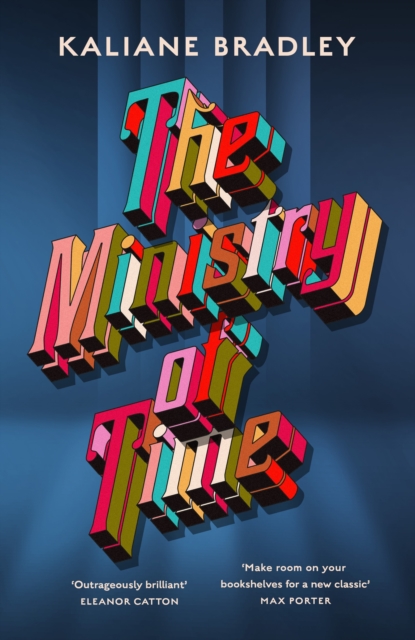 The Ministry of Time by Kaliane Bradley
This has been the UK breakout genre hit of the year: this year’s Babel. It has sold very well, and I can see why. I did say in my SFFWorld review that “I suspect that this will be the major genre hit of the Summer.”
I also said that “The Ministry of Time may not use the newest science-fictional ideas, but it uses well-known tropes to their advantage. The reader doesn’t need detail on how these things work, the reader has read The Time Machine or The Time Traveller’s Wife or seen Doctor Who to not have to worry about explaining too many of the details.
The only minor issue I really had with the book was the cliffhanger ending, which may make some readers groan, whilst others will want to continue the story as soon as possible.
At the end I was reminded of Jodi Taylor’s St. Mary Chronicles series, which I love, and I hope that when I say that The Ministry of Time is as good as those, that is high praise indeed. The Ministry of Time is an astonishing debut novel, a great page-turner with engaging humour and characters you get to care about.“
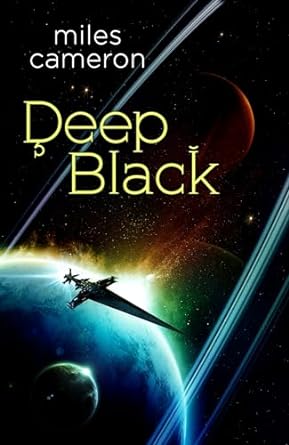
I was looking forward to this book most this year, I think. The previous book in this duology, Artifact Space, was perhaps my favourite SF novel in the year it was published. Deep Space had a lot to live up to! It didn’t quite reach the same level of quality that the first book suggested, and bearing in mind that this is the second book in a set, it was still a memorable read. I said that “”Deep Black is a worthy conclusion to what has come before. I must admit I didn’t find it quite as engaging as last time, being mainly set in an enclosed space and with some quite technical strategic explanation, but the relationships between humans and aliens, not to mention the combat scenes kept me reading. Despite my grumbles, it is still one of the best military SF books out there, and I think will certainly be one of my books of the year.”
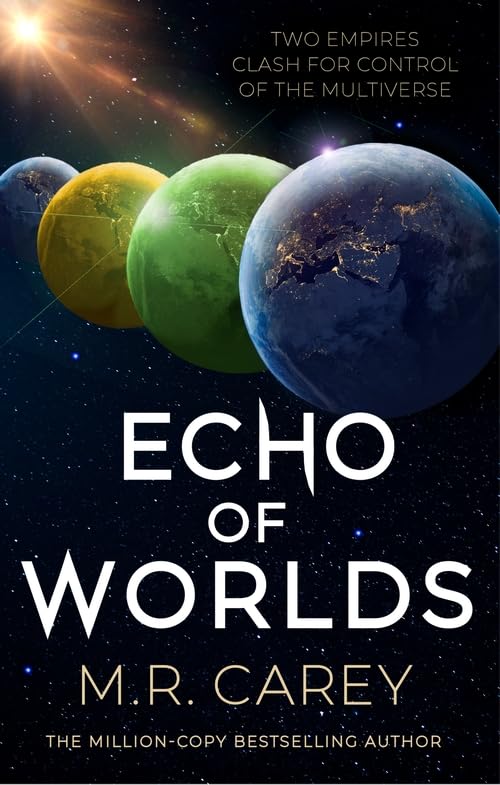
Similar comments about this one as Deep Black. The first book, Infinity Gate, was my favourite SF read of 2023, and I hoped that this would continue. There was a lot going on and this one definitely upped the scale. Whilst my SFFWorld review did mention that I had minor issues, this still was one of my favourites of the year. I said that “It’s epic, action-packed space opera, with major consequences and characters that (as you would hope) have developed from the first book. I’ve been lucky to read a lot of great books this year*, but at the moment, Echo of Worlds is my favourite science fiction read of 2024 so far.”
The Mercy of Gods by James S. A. Corey
This was one of the most eagerly awaited books this year, as the first in a new series from the writers of the best-selling The Expanse. It’s a very different experience though: “…it is also clear that this is the first in a series. Much of the groundwork is done here, there are foretellings of possible future events and hints of bigger things afoot, whilst the ending is the inevitable cliffhanger to lead us to the next book.
…The Mercy of Gods is a pleasingly complex start. It does not always go the way you might expect, which I liked. I was also pleased that the characters we get to know are also complicated and not always likable, or change as a consequence of what happens here.
In summary, The Mercy of Gods is an impressive start to a thoughtful and intelligent series which does not let the authors rest on their laurels. Challenging, provocative and absorbing – it may be worth the hype.”
Another of the most-anticipated SF books of the year. It has been two years since Peter published his last audiobook and four years since he last saw print. Exodus was unusual in that it was linked to a game (still due in 2025, I understand) rather than being something completely independent, but I did think that such a deadline may have helped this book. It is still a major doorstopper, though, and perhaps the biggest book I’ve read this year for review. I said that “In summary, Exodus delivers what readers will want – big ideas, multiple plots, vast scale of time and distance, generally well told – that plays to Peter’s strengths. It is Hamilton ramped up to 11. With its immersive environment, exciting action scenes and epic range… Exodus is a book to get lost in, to immerse yourself in, a dense, thick novel that pretty much delivers what Hamilton’s readers expect.”
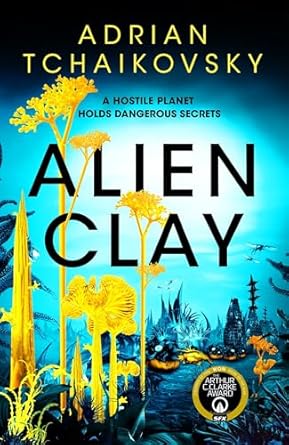
Alien Clay by Adrian Tchaikovsky
Over the past few years, Adrian Tchaikovsky has developed a reputation as being ‘the Brandon Sanderson of SF’, producing one, two and even three books in a year. Such voluminous quantity though has not led to a drop in quality, and Alien Clay (by my reckoning his third book published this year) shows a work that is thoughtful, literate and provocative. I said in my review elsewhere that “Alien Clay shows Tchaikovsky’s strengths. From the start it is familiar enough and yet strange enough to build on science-fictional tropes and take them to new and unusual places. It has clever plotting and imaginative world-building, whilst at the same time allowing the discussion of big and complex ideas in science and politics. It is seriously impressive.”

Also of merit: Machine Vendetta by Alastair Reynolds
As some new series have started this year, others have finished. (See also Echo of Worlds, mentioned above.) This third book in the Prefect Dreyfus series seems to draw things to an end, although there is still a possibility of further stories should the author be inclined to continue. I thought that this series improved as it went along, although I have enjoyed it from the start. In my SFFWorld review, I said that “In summary, Machine Vendetta is a solidly entertaining piece of character driven space opera that fans of the previous books will enjoy very much. It is the last in a trilogy that has grown in depth and complexity as the books have gone on, and this leads to a read with a satisfying conclusion.”
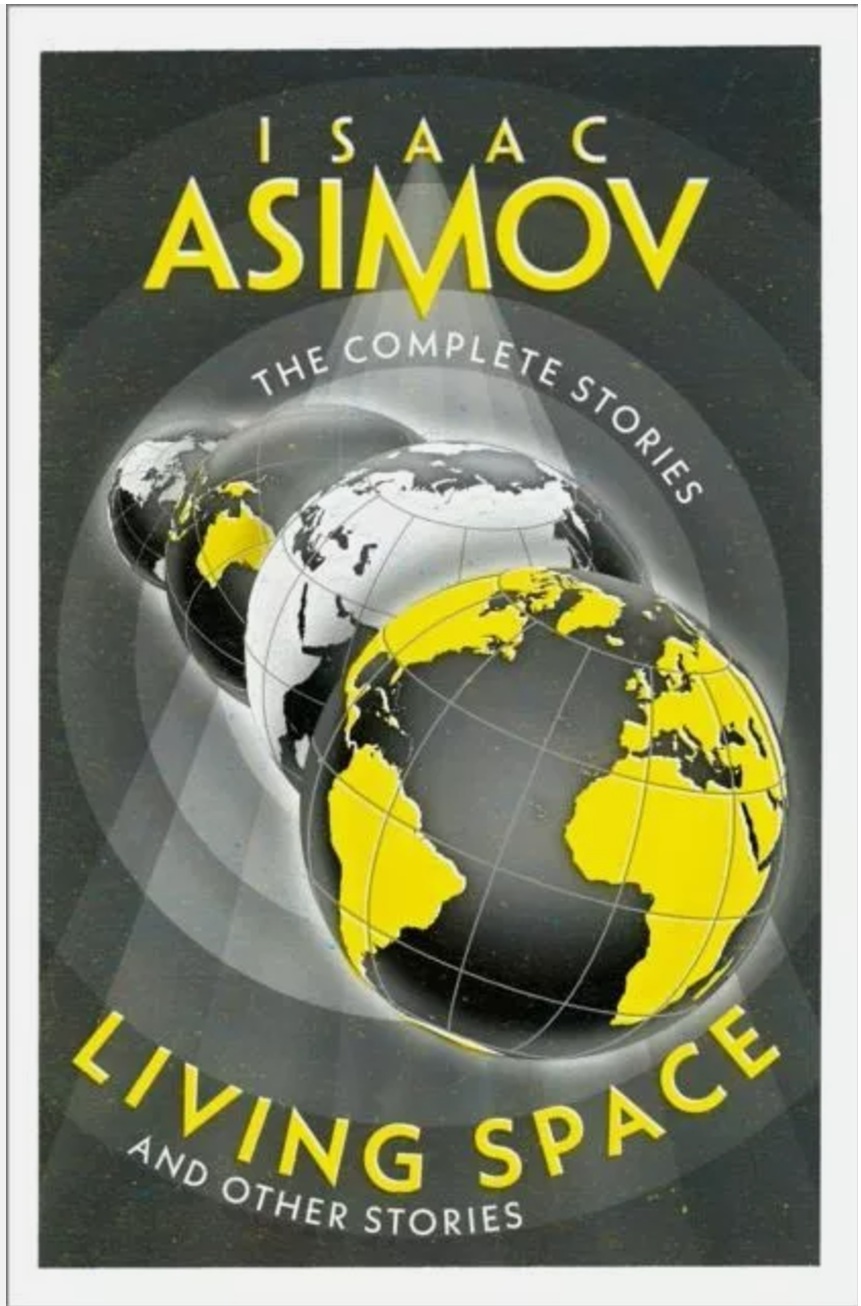
Living Space and other stories by Isaac Asimov
Another nostalgia kick for me – we’re just getting some of the Good Doctor’s works being republished in the UK. This is part of the collection from The Complete Stories, Volume One, and whilst not perfect, and definitely of ‘a time’, was great fun to reread. In my review I said that “Living Space is an ideal way of sampling some of Asimov’s shorter fiction that isn’t Foundation or robot- related (although there is a Susan Calvin story here!) Understandably, for stories around 70 years old, they are a little dated, although they are still a wonderful read. I was surprised how much I enjoyed rereading them, how approachable the stories were, how much they mainly still hold up. If you want to get an idea of how Asimov wrote shorter fiction, of why he was so well-regarded, this collection gives you a hint. Very pleased to see these republished – in the main they deserve to be read.”