
Trying to choose a favourite top ten SFF authors is like trying to choose which breath of oxygen is your favourite; you simply couldn’t function without any of them. However, unlike the oxygen you consume, any choice of writer is going to be controversial. People will agree or disagree based on which way the wind blows; tribal loyalties often abound, and descriptions often get intense; “I’m a fan of early Mieville and late Gaiman” is a phrase I once heard said in all sincerity.
SFF is a body of work that is taken seriously – very seriously – and has sometimes been accused of literature. To be frank, the genre should be accused of literature more often, as there are many fine examples of writers creating serious, creative output that can be both serious and funny together, or just one or the other and still be respected. When non-fans of the genre can willingly watch Game of Thrones on television and still not call themselves fans, SFF needs to consider how to lure people into its realms that is as broad as it is deep.
Perhaps a good starting point is showcasing these authors; I know they’re not going to be universally agreed on, but I hope when you read this list, you can at least find yourself nodding your head and thinking to yourself; “Yeah, they’re good. We need to encourage more people to read their work.” Because, by reading high-quality fiction, civilians will see just how vast the genre is – and just how good is it as well.
So here are my suggestions for the top ten SFF writers. A caveat; these choices are also popular with many other people as well, and I’ve not chosen them just because of that, although that simple fact does help. I’ve chosen them because these writers are able to construct complex, multi-layered plots and characters, with themes that resonate far beyond a simple plot-driven reading of the story. These writers can make you both think and feel, and play around with words in a way that is a joy. This isn’t a populist exercise in list-building, but these writers are popular because they deserve to be, and I strongly believe that each person on this list has a strong case for being there. So let’s get cracking;
1. China Mieville
Mieville is a self-described writer of weird fiction, and by any definition worth noting, he is a very successful writer. He has won the Arthur C Clarke award three times, the British Fantasy Award twice, the Locus Award twice, the Locus Awards for best novelette and best young adult book, a Hugo, a Kitchie, and a World Fantasy Award. Any writer worth their salt who wins that number of awards deserves to be well-recognised.
Having been awarded degrees in social anthropology, international relations, and international law (up to PhD level), you’d be forgiven to wonder just how off the beaten track he might take his work, but the output he’s produced so far is creative, innovative, and intelligent.
He once described Tolkien as “the wen on the arse of fantasy literature”, and has made to move fantasy away from that “stultifying and reactionary” influence. Fighting words, indeed, and he even wrote an introduction to Michael Moorcock’s essay Epic Pooh which, for him, was the start of his adventure into the “new weird” of fantasy literature.
The stand-alone novel of Un Lun Dun was written as a young adult fantasy novel, but can be easily picked up by an adult and appreciated for the inversion of traditional “the person in this prophecy has arrived to save the world” tropes; indeed, the storyline is carried by the UnChosen One. This is a good place to start in his world, swiftly followed by The City and the City, an exquisite combination of weird fiction and police procedural. Two cities in one, where overlaid portions of the same areas are inhabited by people of entirely different worlds and ignored by each other, is monster-free, but sticks with you because of the richness of the world and its characters.
I could easily talk about the Bas-Lag series, of course, or the collections of short stories he’s written, but where would I ever stop?
2. Joe Abercrombe
I discovered Abercrombie fairly recently with The First Law series, a cleverly developed epic fantasy world in the style of medieval-era Europe and Mediterranean worlds. His characters could easily had slipped into one-dimensional good and evil dimensions, but Logan Ninefingers – a barbarian who is actually trying to move away from senseless violence and become something more than the blood-thirsty man he used to be – and Ardee West, a woman whose job isn’t to just sit around saying “Won’t one of these handsome men rescue me?” that gets incredibly tiresome after the first page.
This series is made up of an initial trilogy and then three more stand-alone novels; the dreaded middle book of the trilogy, which so often is given a filler to merely move the pace along from the first to the last book in the series, is well-paced and interesting. I had to strongly resist the urge to read each book in a day, only because I knew then I’d want to read them all again in an instant; Abercrombie moves far beyond the standard swords-and-sorcery style that is so bland and yet so common even now, and makes these books interesting and exciting.
3. Neil Gaiman
… is something of a god amongst fans. He’s helped make comic books cool through The Sandman, which has something of a cult following, and he himself has become something of a cult with his very clear and apparent fan-boy status, marriage to a rock star, and mellifluous speaking voice. He’s also the winner of a huge winner of awards, including the Newbury and Carnegie medals for the same title (The Graveyard Book). With the great variety of titles he’s written and worlds he’d crafted, he probably ranks as one of the best examples of a writer who’s been able to bring fantasy and comic books more into the mainstream.
The Ocean at the End of the Lane, in 2013, is a wonderful example of what I was talking about at the start of this article; where fantasy can be seen as literature in every sense of the world. Being able to write in the style of a child, whilst still creating a book for adults, is a skill indeed, and not many people can do it. Gaiman does it in spades; the book deserves the Locus Award it received, and the beauty of its style and plot are almost unparalleled.
That isn’t, of course, to dismiss his other works, such as American Gods (now a TV series) and Stardust, to name just two of his output, and the fact that he can create stories out of Norse mythology as effectively as setting a book in a graveyard is testament to the quality of his writing style. Describing his output as sublime is almost too good an opportunity to miss.
4. Terry Pratchett
Ah, Sir Terry, a man much-missed and (hopefully) never forgotten. It was Terry who first got me interested in fantasy through his Discworld series; specifically the book Guards! Guards!, which I picked up in a second-hand bookshop because I rather liked the cover. I’d tried to read fantasy before, in the form of Tolkien and the like, but found it rather too serious and complicated in its world-building efforts well beyond my ability to keep track of who was who. Pratchett, however, was in a class of his own; he was funny, he was intelligent beyond measure, and (shock, horror) he was able to weave in literary allusions utterly unpretentiously by assigning the words to dwarves and elves and golems.
His later books took on a slight change of pace when his dementia began to really take hold, but even then, when he was most plagued by the horrors of a disease that was doing its best to ravage an intellect so fierce it could cut, he was still far more incisive than most. I adore his collected output of Discworld stories, each a self-contained unit that still contributes to the whole oeuvre and canon. It rewards loyalty through its in-jokes and developing characters, whilst still welcoming new readers wherever they started.
Pratchett is another god amongst men with the quality and substance of his writer; always witty, never patronising, and entirely without arrogance, his ability to make you care about the characters and the world they lived in was second to none, even when something huge occurred to a major character in the last ever book. When I set that book down, I wept; both for the character I (yes, I – he wrote just for me, he must have done) that had gone and the series which would never now continue. I was – and am – bereft; we are a poorer place without him and the books we will never now see created. I mourn that loss whilst celebrate the quality of his output, and I hope you do to by offering him the greatest honour we can; reading and sharing his work as widely as possible.
5. James Herbert
Herbert is one of those writers who just worked tirelessly and endlessly; like Terry Pratchett, he remains popular even after his death, because of the accessibility of his work. They were quite literally horrifying in their output – Rats might well have been his first book, but also one of his most chilling, and it’s no wonder that the first edition of that book ran out in something like three weeks.
He was a fan of alternate history in stories like ‘48 and Spear, and wrote so well and intensely that you could really imagine these scenarios coming true – and fearing the consequences if they did. His ability to combine the supernatural with the procedural – as in The Jonah – was very clever, and we should remember the commercial nature of his work showing just how popular fantasy horror can be when written intelligently and well.
If you want to see Herbert’s prescience, then read Portent; a story of eco-disasters and children who can save or destroy the world; the disasters and humanity’s reactions to them really strike at the fear in all of us at the potential dangers of a changing and uncontrollable climate.
6. Robert Jordan
I never realised that Robert Jordan was just one pseudonym for James Rigney; did you? I don’t quite know now I feel about that, given that I’ve always just known this writer of one of my favourite fantasy series by his pen name. Still, that’ my issue to deal with; he’s best known for the Wheel of Time series, which Brandon Sanderson had to complete after Jordan’s untimely death.
I’m in awe of this series, as it’s one of the few high fantasy works that I actually enjoyed and found myself enjoying as the books went on. Perhaps precisely because it carried on for so many titles (fifteen in total), because it was so detailed and finely crafter over time. The characters were deep and rich, and the world was varied and evolved over time rather than just sitting in one place. The depth of real-world mythology that was folded into the series was also a thing of beauty, and I for I certainly felt so well-connected to cultural references just by being in that moment.
The entire series has become something of a classic, and it’s even generated an encyclopedia as well to cross-reference everything happening within the well-crafted universe. To witness the evolving nature of a young man who lives on the outskirts of a small village into a leader of armies and a potential defeater of the biggest evil of them all is a magical piece of writing from a writer who cut his teeth writing Conan the Barbarian novels and then moved into the limitless confines of his own imagination. The fact that there’s an annual JordanCon in North America shows the ongoing appeal of such a wonderful series.
7. Peter David
A self-confessed “writer of stuff”, I’ve included Peter David because of the sheer variety of his work – comic books, novels, television and film scripts, and video games – and because of the respect and reverence he shows towards established shows and series by taking things off in a new direction and making them better and richer.
I first encountered David through his work on Star Trek, where he’s written novels and comic books that were entertaining and commercially successful, and then created a new sub-section of the entire enterprise (if you’ll forgive the hopeless pun) with the New Frontier series. I unashamedly call Peter David a commercial writer as a term of endearment and respect; he’s managed to show just how commercially successful science-fiction can be by creating intelligently-written, fun, and fast-moving stories. Like Gaiman and Mieville, he also has a passion for comic books, and isn’t afraid to show it; the ability he has to show off his skill in that format is entirely our gain as readers, as it allows that much-maligned genre to become better and more interesting.
8. Phillip Pullman
An amazingly democratic writer, Pullman has a refreshingly open approach to his writing; he writes in such a clear, concise, and approachable format that even the most complex of ideas wilt and crack under his sharp eye and easy pen. He encourages the reader to find their own levels of meaning in his work and clearly loves the “once upon a time” style of writing, which gives so many more people an opening into the genres he clearly loves.
Pullman is perhaps best know for the Dark Materials trilogy, for which he received the Carnegie Medal (and actually received the “Carnegie of Carnegies”). It’s one of those timeless pieces of work that allows access into fantasy by a wider audience, and shows that the genre doesn’t have to be about swords and sorcery in order to belong to it and be popular.
His books are clever and witty in their output, and Pullman is able to rightly create both male and female characters that are well-round, intelligent, and competing on equal terms to shine as the best thing about the worlds they’re in. With his Dark Materials such a diverse piece of work on religion, adventure, fantasy, and the human intellect, and makes commentary on all these areas whilst allowing us the freedom to explore our own thoughts and feelings on the potential outcomes he’s expounding in his books. His passion for the characters is obvious, as they’re so well-rounded and strong, and the entire trilogy is an innovative take on so much that has come before it. No wonder it was so successful and remains that way; the new titles in what can legitimately be called a series are exciting to anyone who justly calls themselves a fan of the originals.
9. Stephen King

Why wouldn’t Stephen King be included in this list? Another god of writing, his command of the English language is a magnificent thing to behold, it really is; we’re able to witness a love affair with words and settings and people that is almost unparalleled. That’s why his horror is so horrifying, his fantasy is so fantastical, and his supernatural titles remain squirrelled away inside our head long after we’ve put the book down.
A multi-award winning writer (Bram Stoker, World Fantasy, Grand Master, and O Henry Awards, the Medal for Distinguished Contribution to American Letters, and the National Medal of Arts, to name just some), King is prolific. With more than 54 novels and 200 short stories to his name, he’s sold more than 350 million copies of his work around the world, and yet remains a grounded and approachable human being and writer.
King has an incredibly sharp ear for dialogue and human interaction; he is clearly a keen-eyed student of human behaviour, in order to engage with his characters so well and allow them to engage so well to us. I cannot think of a single writer in his particular styles that can even begin to hold a candle to him in terms of accessibility and ability.
Everything from Carrie right through to 11/22/63 and beyond has been well-received and popular because of his engaging prose and ability to really cut beneath the apparent perfection of domesticity that we all know doesn’t actually exist. 11/22/63 is one of my particular favourites, completely out of his usual area of genre writing, and he completely nails it with panache and high quality. It could easily be a required text in American history classes as well as English literature ones.
10. J K Rowling
Is there a person alive who doesn’t know about the Harry Potter series? Even if you haven’t read, you know some of the cultural references; Platform 9 ¾, the correct pronunciation of Hermione, and the name of the Bad Guy. With 400 million copies sold, and multiple awards under its collective belt (including a gold Blue Peter Badge, as well as the Locus, Hugo, Bram Stoker, and Edinburgh Awards), that’s no surprise, really.
At a time when literature for young people is being given up in favour of the internet and computer games, and when fantasy in particular is perhaps one of the least favourite genres, the Harry Potter series revitalised a love of words in so many children, and allowed adults to access a world that they can share with their children and enjoy on a different level with darker themes.
Harry Potter has given us a fresh vision of magic with a skill that is rarely matched amongst writers in the genre; so many attempts have failed due to a high-handed or overly-convoluted approach. With Rowling, she makes the basic assumption that her readers are intelligent and want to be rewarded for their loyalty with developing and developed characters, plot lines that stretch them, and a writing style that envelopes readers into the universe entirely. Rowling achieves all of these with a deft level of expertise, and clearly cherishes the world she has created; to encourage and liberate young people and adults to read, and to still be popular over a decade later, is an art; if fantasy literature can ever be clever and commercially successful, there’s no finer example than this series of books.
***
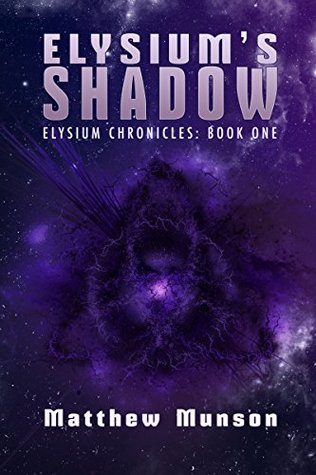 Matthew Munson is a sci-fi and fantasy author published through Inspired Quill, with a duology published in 2011 and 2013, and the first book of his science-fiction trilogy – In Elysium’s Shadow – out now.



So glad to see my all time favourite James Herbert on this list. I often feel he’s not mentioned enough.
Pretty much every time I see lists like this one, it reminds me of all the amazing works I have yet to read – which is both frustrating (because there’s more good stuff out there than I’ll be ever able to read in my life) and reassuring (because there’s so much good stuff out there that I’ll never run out of things to read in my life)!
PS: I’d like to swap an “L” for an acute accent, correcting all at once the names of Philip Pullman and China Miéville! :-p
Really good point, Jens, which is why these days if I find I’m not enjoying a book I tend to move on – there’s usually something out there I can try instead! This wasn’t always the case, but you know – “So many books, so little time!”