Review of the Decade

As we approached the end of 2020 (and what a year it was!), Rob Bedford set us a challenge: as we are at the end of a decade (I know, I know…the purists will say “Not quite!”), what books published over the last ten have we found memorable? Indeed, what 10 books would we recommend from the last 10 years?
So: I gave it some thought. First off: ground rules. These are personal choices. They may not be ‘the best’ in terms of critical acclaim, or the number of awards won, they may not be a list designed to cover the breadth and depth of the wonderful genre we visit. (I suspect KatG will do that better than I.) But they are the ones I will go to and will reread when I do.
Secondly: We have the thorny issues of books in a multi-volume series. Do one or two books in a series published between 2010-2020 make them count in this list? Can I include more than one in a series (A recent Time list did this in the Greatest Books of all time, then filled it with Harry Potter and Tolkien books, for example.)
I’m thinking George RR Martin’s A Song of Ice and Fire/ Game of Thrones series, for example. I could accept A Dance With Dragons (2011) as one of the books of the decade, but can I do that without appreciating the rest of the series? (And yes, we’re still waiting on The Winds of Winter.) I’ve tried not to. Similarly Robin Hobb’s The Fitz and the Fool Trilogy, possibly my series of the decade, I’ve not included.
Another issue – how about single books that are midlist in a series, following a great start but with unfulfilled potential? (I can think of series out there that go badly wrong at the end for me, for example – and yes, Harry Potter, that sadly means you, for me, at least. Should I mention Patrick Rothfuss’s The Wise Man’s Fear (2011, which I really enjoyed, but have now been nearly waiting 10 years for the next book?) Well, it’s a risk. I’m tempted to try and stick to books that can stand-alone, even if they are broadly part of a series.
Anyway, what this boils down to are 10 books (actually more… you’ll see!) that I have enjoyed a great deal – ones that I have enjoyed and have reread or at least would be very happy to reread over and over.
It’s been fun, but harder than I thought.
To the list! Let’s sneak one in under the radar…. Although these are 2010 publications, some will claim that 2010 is the beginning of the decade (I know, I know…) and so I’ll fill the gap in.
IF I was to include 2010 in my decade list, THEN I would include:
1. Black Out/All Clear by Connie Willis (2010)

Connie’s The Domesday Book (1993) is one of my most recommended books to non-genre readers. It is certainly one of the ones I’ve bought most for others. Though admittedly bleak, it is certainly engaging reading, and has caused quite emotional responses in those I’ve given copies to.
I was therefore very pleased to read these books*, returning to the alternate world of Professor Dunwoody and his associates, but in a World War Two timeline. They are undoubtedly extensive, and took Connie years to write, which partly explains their length (Together there are 1148 pages.) I said at the end that “This is a pleasure, from a formidable writer whose storytelling skills are still a treat. I’m very pleased to write that this book sustains its tale for over 1000 pages and it is a wonderfully thrilling and compelling immersive story with characters you care about.”
Connie’s combination of fully rounded characters, subtle humour and precise world building make this a memorable read for me. It also won the 2010 Nebula Award for Best Novel, the 2011 Locus Award for Best Science Fiction Novel, and the 2011 Hugo Award for Best Novel.
*And straight away, not only have I added a 2010 book, I’ve also started with a bit of a cheat, with two books here. In my defence, although the books are published separately (and were reviewed eight months apart!), they are really one book.
Let’s start the decade properly:
2. The Heroes by Joe Abercrombie (2011)
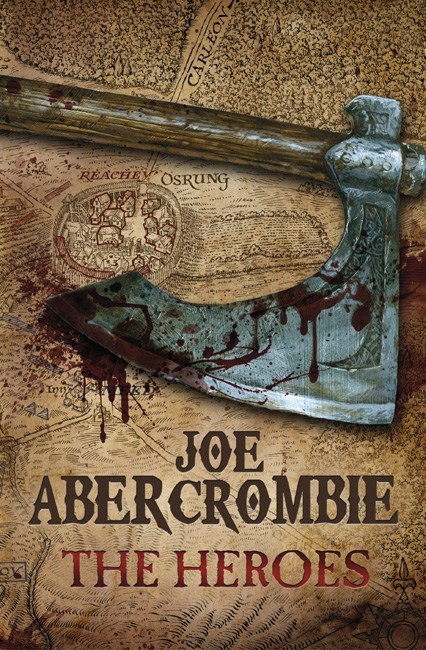
Well, I guess it would be unusual if I didn’t have an Abercrombie in my list. I’ve gone for this one, not because I am a minor character in it, but more because it is a standalone, though the recent series would be just as good. With its gritty violence and gallows humour, Grimdark has become such a thing over the last decade, but for me there are none that come close to the anarchic style and wit of Mr Abercrombie.
Though I have loved the books before, for me this is Joe’s highlight to date. This is an evolution from, and a distillation of, all that was great in his previous books. Though there was the odd very minor misstep, I loved it.
I said that “This is a fast-paced, hard, mean book, with characters of an ambiguous nature, actions that are decidedly questionable and expletive-rich dialogue that seems to have emerged from the bottom of a sewer. And yet, as it unfolds, for all its potty-mouthing, the tale draws the reader inexorably in. This was a book hard to put down, which for a nearly 700-paged novel takes some doing.”
Other honorary mentions for 2011 from me would be Kings of Eternity by Eric Brown and The Wise Man’s Fear by Patrick Rothfuss (10 years and counting… and a sophomore novel, but I liked it.)
3. Throne of the Crescent Moon by Saladin Ahmed (2012)

This one is a little left-of-field, but I enjoyed it so much when I reviewed it back in 2012. It’s a Weird Tales/Arabian Nights story re-engineered for the 21st century, full of ancient mystery and occult unknowns. Knowledgeable in both culture and trope traditions, literate and even scary.
I said that “In talks of gods and religion, ancient evils and older spells, Saladin has tapped into the well-stone of good old-fashioned storytelling in an old established setting of ancient Arabia. This is Arabian Nights meets Clark Ashton Smith but with less purple prose and more adventurous actions.
For those who want an engaging and exciting tale in a timeless environment, filled with the romanticism of ancient worlds and a touch of the unreal, this is a recommended read. I enjoyed it enormously.”
It is interesting to see others such as P. Djeli Clark cover similar ideas more recently. I would still like to see more from this author.
Other honorary mentions for 2012 from me would be Existence by David Brin, Red Country by Joe Abercrombie, and The King’s Blood by Daniel Abraham (which I think others have mentioned.)

I was pleased to be an early adopter of Joe’s work before the news broke about his parentage. Generally his short stories work best for me, his novels less so. When his writing works, it sparkles with energy, passion and knowable truth. However, this is perhaps my favourite of his novels, filled with small-town America vibes and very scary monsters in human form. NOS4R2 encapsulates his considerable strengths.
I said that “This is a book that starts with a bang and then relentlessly builds. Joe managed to make my skin crawl in the first chapter, turning what should be a time for celebration into something decidedly creepy. At the mid-point of a lengthy book it became near un-putdownable, in that horrifying ‘can’t look away from a car crash’ kind of way. Although the details are dark and even horrible, the narrative pull is relentless and unstoppable.
I’m so pleased that a Joe Hill novel has finally reached the high standard of his short story collection 20th Century Ghosts. This novel really is the business, and deserves to do very, very well.
It is a sign of the brilliance of this book that I’ll never think of Christmas in the same way again. What is there to say about this one? How about ‘Thank you, Joe.’ ”
Another honorary mention for 2013 from me would be The Time Traveller’s Almanac by Jeff & Ann Vandermeer, which was a huge and broad tome of tales about time travel.
5. Station Eleven (2014) by Emily St. John Mandel

One that caught me by surprise, a small arty book that aims for the literary end of the genres. It’s quiet yet engaging development was not what I was expecting and yet became one of the most memorable of the decade.
I said that ”Even though Station Eleven deals with the near-end of the world, the feeling at the end is actually one of optimism and relief. For in spite of everything that happens, despite the worst that this story can show, there is within people who are good and, most importantly in a novel, make us interested in their survival. As readers we want them to succeed – a feeling that’s not easy to create when you look at what has gone before.
It is a tale that looks back as well as forward – remembering and valuing what used to be, as well as setting up a different, yet plausible, future.
This one just made it into my ‘best of’ list for 2014, being the last book of the year I expect to read for review, but once I picked it up, it was un-put-downable. A book about the end of the world, read at the end of the year. Rather appropriate, (some might say serendipitous) that.”
And after the year we’ve just had, looking at the events of 2020, Station Eleven may give the reader a rather jolting recognition, and yet behind the horror there is hope, which may be what we need at the moment. This is one I have bought colleagues a few times when they say “I never enjoy (put your own genre example here) novels!” to show what is happening in genre. None of them have been disappointed.
Other honorary mentions for 2014 from me would be The Abyss Beyond Dreams by Peter F. Hamilton (2014), The Incorruptibles – John Hornor Jacobs, The Slow Regard of Silent Things by Patrick Rothfuss (very different), The Three by Sarah Lotz (an effective horror), Half A King by Joe Abercrombie (unsurprisingly), The Abyss Beyond Dreams: Peter F Hamilton, ULTIMA: Stephen Baxter, War Dogs by Greg Bear, Robert A Heinlein: The Authorised Biography, Volume Two: The Man Who Learned Better, 1948-1988, by William H. Patterson Jr. (which was by no means perfect but at least gave us a glimpse into the life of this secretive writer), V-S Day by Allen Steele (old-school alternate history), and yes, even The Martian by Andy Weir.
6. Twelve Kings by Bradley Beaulieu (2015)

This was another surprise that seemed to come out of nowhere (although I know Bradley had published before.) It’s another Fantasy set in a desert, all sand and sorcery (I’m starting to notice a slight pattern here!) One of the few that I found difficult to put down. The lead character Ceda is memorable and the world she inhabits equally so. Big fat immersive Fantasy. I said that ”How often do you read a book not wanting it to end? Or, as you read, you feel so much in a book’s grip that you are happy, just knowing that this is good. It happens too rarely for me these days, but Twelve Kings is the first book that did this for me in a long while. Twelve Kings provides superior world-building, memorable characters and an exciting plot in a thoroughly entertaining adventure that I struggled to put down.
Putting it simply, Twelve Kings is the best new Epic Fantasy I’ve read in years.”
Other honorary mentions for 2015 from me would be Half the World by Joe Abercrombie, The Aeronaut’s Windlass by Jim Butcher, The Traitor by Seth Dickinson, The Devil’s Detective by Simon Kurt Unsworth, The Three-Body Problem by Cixin Liu (which caught me on the hop by winning the Hugo Award), Luna: New Moon by Ian McDonald, Seveneves by Neal Stephenson, Children of Time by Adrian Tchaikovsky (another Award-winner) and The Promise of the Child by Tom Toner.
7. A Headful of Ghosts by Paul Tremblay (2016)

One of the few genuinely chilling Horror’s I have read in recent years. This is one of those that uses an unreliable narrator to tell its story. I was drawn in by the accessible style, which lulled me into that sense of “I know where this is going…” until I was wrongfooted at the end. I didn’t get the ending at first, but re-reading it (straight after the first!) I realised what a clever book and tricksy author Paul is. When I got it… it all made sense.
I said that: “I said at the beginning that A Head Full of Ghosts was the first novel by Paul I have read. Based on this, it won’t be the last. Once started, I found it difficult to put down. Chilling (even for me, a hardened reader and reviewer!), clever and in my opinion about as good a story of this sort as you are going to get.”
A honorary mention for 2016 must also be for Arkwright by Allen Steele, which I loved for its old-school storytelling, epic scale and love of genre. The ‘senswunda’ is strong in this one.
8. Strange Practice by Vivian Shaw (2017)

One of the most enjoyable books this decade, a world of vampires and werewolves and monsters which was a quick read that gave me a virtual hug whilst reading it. Supremely accessible, whilst the plot is nothing new, the characters were lovely. Another unexpectedly entertaining pleasure.
I said that “ …most of all, and perhaps surprisingly for a book filled with monsters, Strange Practice has a lot of heart. The characters clearly care for each other and their mutual investment in each other’s well-being leads to a book where you want to see that all is well. Vivian is to be commended for writing an entertaining book with characters that the reader will love – even the undead!”
Other honorary mentions for 2017 from me would be Kings of the Wyld by Nicholas Eames, Sea of Rust by C. Robert Cargill (which was a modern take on robots that I think Asimov would’ve enjoyed), Avengers of the Moon by Allen Steele (more old school pulp modernised!) and All Systems Red by Martha Wells, (introducing me to the wonderful character of Murderbot!)
9. Empire of Silence by Christopher Ruocchio (2018)

This one took all the elements of Science Fantasy – spaceships and swords, aliens and ancient orders – and rewrote them into a thoroughly entertaining contemporary version of the story. Whilst I recognised elements from other tropes, the energy and enthusiasm of the immersive plot kept me entertained throughout, which I said in the review:
“It’s been a while since I’ve been able to immerse myself into a big SF book. Whilst not without issues, Empire of Silence is so engaging that I’ve been able to overlook its faults. It won me over. This is one not to think about too deeply, but instead just enjoy the ride.
Empire of Silence is clearly a debut, but celebrates all of the joy and the sheer enthusiasm of old-fashioned Space Opera, by mixing up lots of elements that readers will know and love. Whilst there are times when it overreaches itself, and there some contradictive coincidences that may make the reader wince, generally it’s a book that’s a lot of fun, engaging enough to allow the reader to ignore its deficiencies.”
Other honorary mentions for 2018 from me would be We Sold Our Souls by Grady Hendrix (who seems to be resurrecting Horror tropes from the ‘80s), and The Toymakers by Robert Dinsdale, which is one of the most Christmassy books I have ever read.
10. Legacy of Ash by Matthew Ward (2019)

And the same with this one, but from a Fantasy perspective. I have been quoted on this book, because it was a big fat novel I struggled to put down. Lots of characters, wide scope, big battles, world-changing events. I thought I was going to like it when I started it – I was pleasantly surprised how much I was. My enthusiasm was clearly liked by the publisher who chose to quote some of my review:
“Do you remember that feeling of excitement that you get from a really good book, not knowing where it was going but wanting to be there and never wanting it to end? This is that sort of book for me. I have lost sleep, forgotten food (not good for a diabetic!) and made this the thing I pick up every moment I can get, until it was done.
Sometimes a book just has to be the right one, read at the right time. Thank you, Matthew, for restoring my faith in epic Fantasy novels.”
Other honorary mentions for 2019 from me would be Exhalation by Ted Chiang, Sherlock Holmes and the Christmas Demon by James Lovegrove, Ninth House by Leigh Bardugo, A Little Hatred by Joe Abercrombie, Wakenhyrst by Michelle Paver and Ghostland, by Edward Parnell.
Lastly, for 2020, it would be easy for me to mention one of my Year’s Best list, shown HERE. If I was to pick one, I would probably go with We, Robots, for its breadth and depth, which kept me greatly entertained whilst reading it – well, at the moment, anyway!

But for a novel I’m actually going to go for one that Rob reviewed back in October and I finally got to over the Christmas break. I devoured it quite quickly. Though some in the Forums have mentioned its similarity in theme to work by other authors (such as Claire North), and have found that annoying, I found this to be a well written, character based novel that was surprisingly emotional.
There’s a lot here for me to like and the author is clearly playing to a typical genre audience – it has books, a cat (in a bookshop, named Book!) for example – but I also loved both the settings – rural France, Paris, London, New York – and the flawed characters. Whilst I saw the end coming – a sort’ve Stockholm Syndrome situation, perhaps? – it didn’t stop me enjoying the ride, and I was sad when I finished the book. My book for 2020 is what I think we need in these difficult times – a book that connects to people and the places they inhabit – The Invisible Life of Addie LaRue.

And that’s it from me. There are always those who nearly made the cut, but these are all books I would recommend, all books I have remembered from the 500+ I’ve read in the last decade, and most importantly ones I would happily reread (and in some cases have done so!)
I hope you find my choices useful, and enjoy them as much as I have.
Mark has been a Staff member of SFFWorld since 2005 and a Forum Member for longer. When not being a parent to some surprisingly grown-up children, his reading, reviewing and cat-wrangling during his residency at Hobbit Towers is punctuated by also working in education. He is at his happiest with a good book/film, topped up with regular supplies of hot tea.