It’s that time of year when, as we have done for the last decade or so, we have dragged ourselves from the revelries here at SFFWorld to try and put some sort of order to our favourite (and not so favourite!) stuff from 2018.
And so, in the finest traditions of trying to reduce our lists to five in each category, here’s the second part of our attempt to show what we liked (or didn’t) this year. Taking part are Rob Bedford (Rob), Mark Chitty (MarkC), and Mark Yon (MarkY).
Part 2: Science Fiction Books
Mark Yon
Rather like Fantasy (LINK) it’s been an odd year this year for me and Science Fiction. But unlike Fantasy, it’s odd in a good way, in that I’ve been much more surprised and pleased by the quality and range of newly published SF this year. That’s not to say that there’s not been some stinkers, and, like Fantasy, some whose popularity (or at least overheated publicity) has left me mystified. On the whole though, there’s been a lot less disappointing books in SF. Which has been a surprise to me, although others are of the same mind, I’ve been told.
With that in mind, here’s the five new Science Fiction books I have enjoyed most.
 Summerland by Hannu Rajaniemi
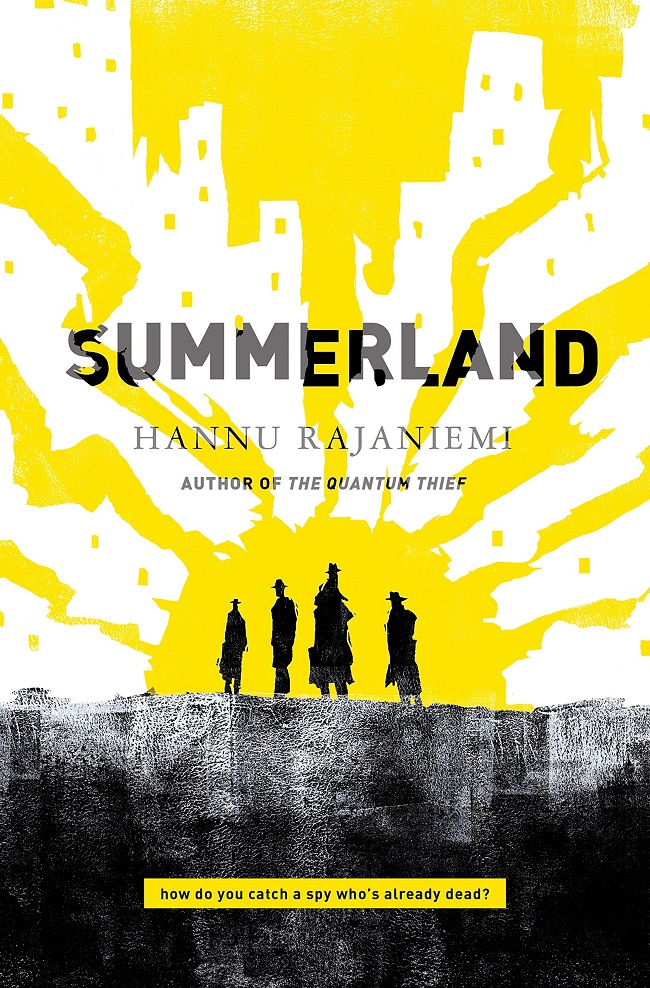
And here’s that novel that crosses over between Fantasy & SF, in that it’s an alternate history (which I always regard as SF) but with Lovecraftian Fantasy trappings – a 1930’s where the dead are living. As ever in Hannu’s work, it is rigorously thought out and makes this espionage novel with hints of the occult a fascinating place to be. Not for everyone, but a quality book of its type. Reading others this year of a similar nature (it’s clearly a popular theme at the moment), none come close.
A bit of a surprise this one, as I was a little underwhelmed by Steven’s Willful Child SF series. This one is an updating of the old First Contact trope, which brings the idea bang up to date. There’s a lot of serious discussion on the importance of freedom, the nature of humanity and the relevance of humans in a bigger universe. It’s not perfect but it’s a grand uplifting of an SF standard. As seen by Canadians. With humour.
- Red Moon by Kim Stanley Robinson
A suggestion that, due to its late publication in the year, just made the list – so recent that the SFFWorld review’s not appeared yet! Like Steven’s other recent SF work (mentioned above), Kim’s last couple of books have been good for me, but not outstanding. This is more of a return to form, in my opinion the closest of Kim’s more recent novels to Red Mars, I think. As with the best of Kim’s work, Red Moon is complex, intelligent and filled with good ideas. The plot just about holds together at the end.
Red Moon is a story of what life could be on a colonised Moon of the future, with most of the satellite planet being run by the Chinese. There’s a murder, quantum computers, political plotting and intrigue, wrapped up with Kim’s now traditional mystical component. It seems almost real, which is part of its attraction, albeit from a deliberately different non-Western perspective. If you liked Ian McDonald’s Wolf Luna books, or want an alternative to the traditional space colonisation novel, I think you’ll like this one.
My ‘guilty pleasure’ SF novel this year. No in-depth analysis, not too much navel-gazing angst… just generally a lot of fun. A Space Opera that you pretty much know what you’re going to get from the start (Dune meets Gladiator meets Alien with a touch of Gene Wolfe), but it does it well and as a reader you feel satisfied at the end: even when it ends with things about to get going. Rip-roaring entertainment, that doesn’t need (or cope with!) too much thinking about. Great fun, though!
This was a book that made me think of the old space exploration novels of the 1950’s and 60’s, such as those by Murray Leinster or Chad Oliver, but given a contemporary upgrade. It’s not perfect but, in short, there’s great characters, impressive world-building and enough big battles to keep any Space Opera fan happy.
Honorary Mention also to Ursula K. LeGuin’s Dreams Must Explain Themselves, which is a collection of essays and speeches that argue the point and purpose of science fiction and fantasy in as eloquent a manner as you can get. If anyone needs to know why the genres are important, give them a copy of this book.
An American Story by Christopher Priest almost made it as well, as a quality piece of work from a master of subtlety not afraid to provoke and challenge.
It would be remiss of me to mention some of my old SF reads this year, as they seem to be popular, and they have taken up much of my reading time. The change in style and tone from old school SF to New Wave SF in the UK in 1963 over at Galactic Journey has been fascinating. I am on record as saying that I’m not always a fan of the New Wave, but with greater age and wider perspective I can now see what the authors were trying to do – even when they were not always successful. Brian Aldiss, JG Ballard, John Brunner have all been regular reads this year, with varying degrees of success.
Of the other SF ‘classics’ (and those less so!) I’ve been rereading more ‘old Heinlein’ – this time concentrating on the Future History stories (LINK). Some have kept their allure, others have tarnished slightly, in some cases a lot. More recently, my view of Heinlein has been given additional perspective through reading Alec Nevala-Lee’s lengthy history of the Golden Age, Astounding (LINK). My view of Heinlein remains as muddled and as complex as ever. Carrie Vaughn did a nice upgrade of the Heinlein template in Martians Abroad, which I caught up with this year.
Other old books that have been pleasantly enjoyable have been (in no real order) The Fountains of Paradise and The Lost Worlds of 2001 by Arthur C Clarke, They Shall Have Stars and A Life for the Stars by James Blish. Even with each having a degree of ‘datedness’, I have enjoyed rereading these a great deal.
Rob’s SF Summary
 SF was a good year for me. Although I read about twice as much Fantasy compared to the SF I read this past year, there were definitely a few major standouts.
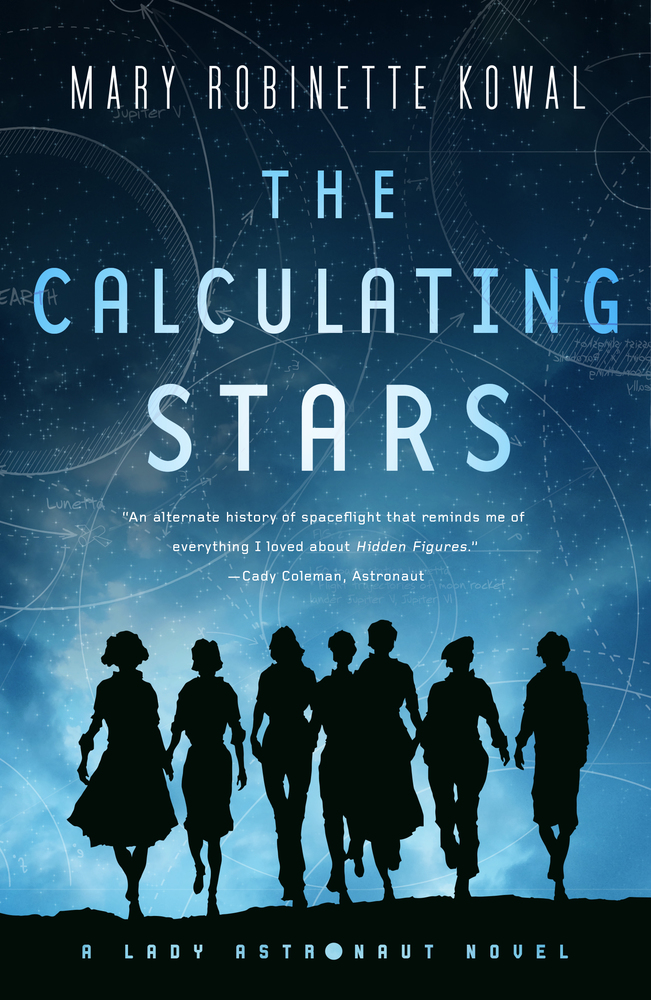
- The Calculating Stars & The Fated Sky by Mary Robinette Kowal
I’m lumping these two together because they form a single story and were published in back to back months. These are the two of the best Science Fiction novels I read this year, and some of the best Science Fiction I’ve ever read. A wonderful, seamless blend of character study, hard science fiction, and alternate history. In 1952, the space race is in its infancy and the world is changed, one may say shattered, when a meteor crashes into the ocean off the East Coast of the United States. Elma York and her husband Nathaniel are in the cabin in the Poconos in Pennsylvania when the meteor strikes. The “space race” becomes more important as it becomes clear that the meteor’s long ranging effects will mirror those of the meteor that wiped out the dinosaurs. The two books follow Elma as she is an integral part the first days of Space Exploration to humanity’s arrival on Mars. The Lady Astronaut novels are instant classics and pinnacles of what Science Fiction can and should be.
- Into the Drowning Deep by Mira Grant
As most folks know, Mira Grant is a pen name for Seanan McGuire. I’ve become a convert to all of her fiction over the past year and this is a very strong, creepy, science-fueled novel. Mermaids are real in this novel, and a deep sea expedition is trying to find them. This novel is equal parts horror and science fiction and quite simply a powerful, wonderful novel. I consumed this one via audio book and that added to the creepiness. As much as we all know mermaids are likely not real, McGuire packs enough real-life science into so much of the plot that the mermaids might just be believable. Great characters and a wonderfully brisk pace make this a fantastic read. I’m cheating a bit on this one because it first published in November 2017, but I read the audio early in the year and the paperback published in May 2018.
Another hard-science fuelled novel, this time a debut. In Semiosis, Sue Burke’s debut novel, a group of people have left an Earth in the near future (about 2060) that is deteriorating, hoping to cast off some of the social constructs that have pulled humanity down and start anew with a more harmonious mindset. At its heart, the novel is a first contact story. After nearly 160 years, these people land on the planet they dub Pax, or peace. Semiosis is a fascinating and impressive debut, worthy of deep consideration on how people live together and how they can (and should) learn from past mistakes. It is a novel that shows a hopeful new beginning for humanity and gives a glimpse of Sue Burke’s talent and intelligence as a writer that is hopefully a sign of more to come, whether in a new story/setting or in the fertile ground from which Semiosis was cultivated.
Here’s another impressive debut, this time leaning heavily on the Military Science Fiction of SF. This is a pretty layered novel, there’s more to just the peanut butter of the missing politician’s son wrapped in the chocolate of the future space setting. Planetside is a fairly nuanced look into the somewhat closed culture of a military base and an entire culture shaped by a seemingly never-ending war. This was a brisk, entertaining novel. Mammay didn’t give too much detail on the future introduced in the novel, just some bits in pieces that could be explored in future volumes. I was reminded a bit of some of John Scalzi’s Old Man’s War novels, largely because of the snark and the older protagonist. A great start to a series and novel-publishing career.
This is the big SF novel of 2018 that really couldn’t be ignored. It has been referred to as Patrick Rothfuss’s Name of the Wind in SPAAACE! Throw in some heavy Dune influences and you should have a good idea of what to expect. This is a big epic novel that is primarily a character study told through the first person voice of Hadrian Marlowe. Not supremely ground breaking and it wears its influence all over itself, but bold, audacious, and just flat out fun for me.
Mark Chitty’s SF Summary
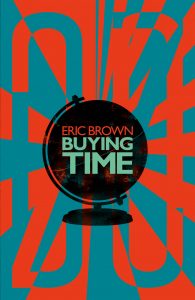 Buying Time by E. M. Brown

Of all the SF I read in 2018, Buying Time is the one that I consider the best. Eric Brown is an author whose tells his stories around the characters he creates, and he does it so well. He also manages to bring a realism and comfort to the stories, from a cosy country pub to a relaxing Mediterranean break, and often you can forget you’re reading an SF story as you’re pulled ever further into the lives of the characters. Great stuff, and one of his best.
- Salvation by Peter F Hamilton
Wide Canvas Space Opera, that’s what Peter F Hamilton delivers once again with Salvation. I’ve read this twice already, and I’m sure that there is another one or two readings imminent before the sequel is out. Hamilton intricately plots his novels, laying hints and detail throughout that only really hit home when you reach the final page, perhaps more so in this book. The only criticism I had was it felt like the first part of a story rather than a complete novel. It’s not a bad thing by any means, and serves to make the sequel an even higher priority than it already was!
- Outpost by W Michael Gear
I’ll be honest, it was the cover that drew me to this one, but once I started reading I got completely sucked in. Focusing on the colony world of Donovan, a planet whose native wildlife is as dangerous as they come, it’s a story about the latest corporation starship to come to the world after years without any sign. With the colony barely surviving, and having overthrown the last corporation dictator, it’s an interesting look at a company coming to take back control, and what happens when things don’t go to plan. The flora and fauna of Donovan is very reminiscent of James Cameron’s Avatar, yet the characters are varied and interesting. A surprise hit for me, and the sequel, Abandoned, is already out and eager for my attention.
- Alien: The Cold Forge by Alex White
Hands down the best Alien novel I’ve read, and I’ve read nearly all of them. White manages to take an idea that has been done to death with xenomorphs and make it fresh, all the while adding little bits in here and there to lift it far above your standard Alien novel. Plot, characters, and story all complement each other, with a prose that makes the pages turn late into the night. Fantastic stuff for Alien fans.
- The Quantum Magician by Derek Künsken
A late addition to my best reads list – I only finished it a week or so back. Thoroughly entertaining SF that mixes solid hard SF with an intergalactic heist. Künsken has managed to write a fantastic novel here that has so much going on, but works seamlessly regardless. The characters are a varied and interesting bunch, and the offshoots of humanity, particularly the Homo Quantus and the Puppet society, are fascinating and could take up a whole novel to themselves. Very much looking forward to see how the story continues in the sequel.
Honorary Mentions
Mentioned by Mark Y above, Rejoice, A Knife to the Heart by Steven Erikson was an enjoyable novel, with the premise of no violence and limiting human damage to the planet working well to keep things interesting. Rob talks about Semiosis by Sue Burke above too, but given how many good things I’d heard about this book, I was slightly disappointed. However, this is very good and the idea and story of sentient plant life and humans adapting to live on Pax told over six generations was well executed, but I just expected a little more from it. Gareth L Powell’s Embers of War is a space opera with interesting characters and events that flowed well and was a pleasure to read, and the sequel is on my list for 2019. Another book I read that has stuck with me is One Way by Simon Morden. Despite a few issues with the premise and its execution (more about the lack of detail passed to the reader), I thought it was well-executed and a real page turner. A shame the synopsis gives too much away!
Best of Older Reads
- The Lazarus War trilogy by Jamie Sawyer
I came across the Lazarus War books after seeing the sequel series being advertised. I decided to give thesae a go as they sounded like my kind of thing, and I was most certainly not disappointed. Sawyer manages to tell a very good story across these three books, and each leaves you wanting more. The Krell are a fantastic and very alien enemy, somewhat comparable to xenomorphs, and the simulant operations used by humanity to fight them adds another layer to a great mil-SF series. I have the first two books of the next series, the Eternity War, ready to go, though I may hang on until the third I released and binge myself on them.
- Valiant Dust by Richard Baker
I had two books on my shortlist for Christmas in 2017 and this was the one that I decided against at the time. I finally managed to get to it in April, and I was so glad I did. This is exactly my type of novel – mil-SF with a touch of politics, plenty of action, and very interesting characters and setting. It doesn’t look like it’s had a UK publisher, which is a shame, but I’m importing the US hardbacks for my collection. The second novel, Restless Lightning, came out in November and my copy has just arrived for some Christmas break reading.
Another 2017 release that I missed last year, and I enjoyed this one quite a lot. With a very interesting world and history that led to the extinction of humanity, we’re left with robot AI’s and some intriguing events and machinations occurring. There’s a definitive ending, but the world is left open for the possibility of more stories – and I for one would be very happy to see them.